Message from leadership
Tēnā koutou e tau mai nei ki tēnei pānui
We hope this pānui reaches friends and whānau well.
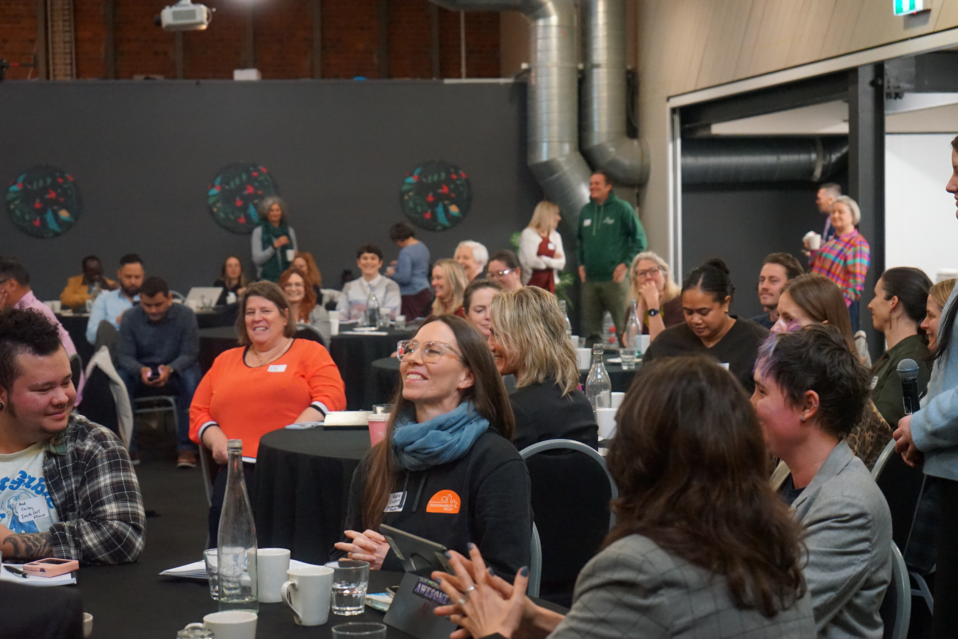
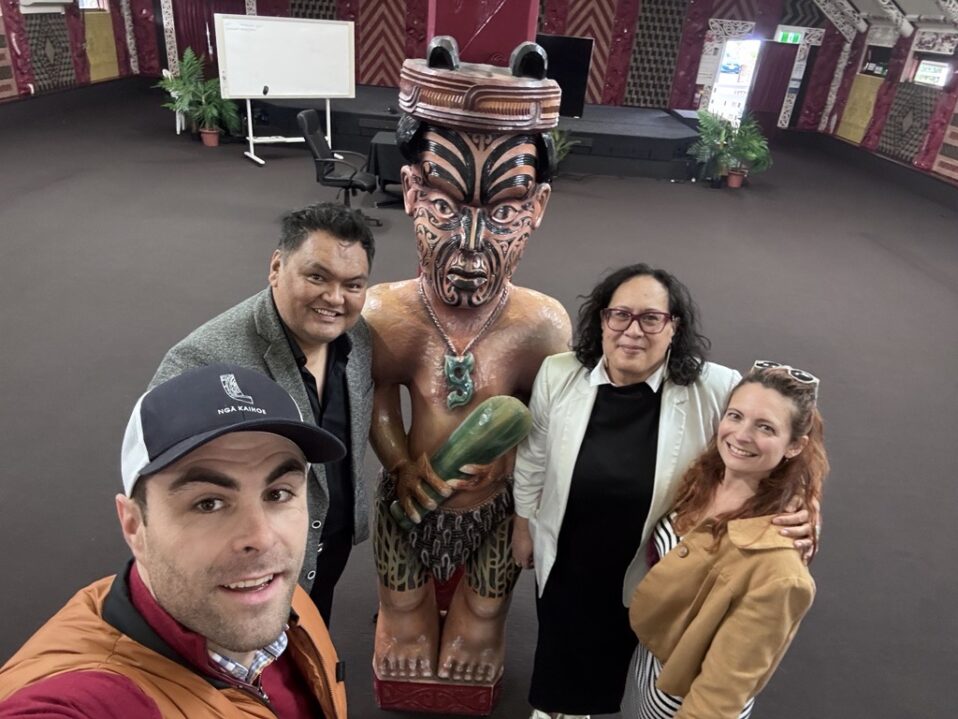
The Hui E! Team, like all of us have been busy with supporting and convening hui to ensure the tangata whenua and community voices are front and centre when speaking with groups of influence.
Although we are still in February, we constantly think about weather stricken whānau, communities and groups as well as our sector responding to need, submissions and being engaged to input into policy and other matters acknowledging both the engagement and submission fatigue we are all under, when you can please take time to refill the batteries.
We look forward to our upcoming hui with the Constellation in Wellington and seeing the whānau again so enjoy the content in this pānui whānau and from your team here again – we do hope this reaches you well.
Ngā manaakitanga ki a koutou katoa
Nā Jess, Katie, me Patrick mai i te tira o Hui E!
What we’ve been working on
Tangata Whenua Forum
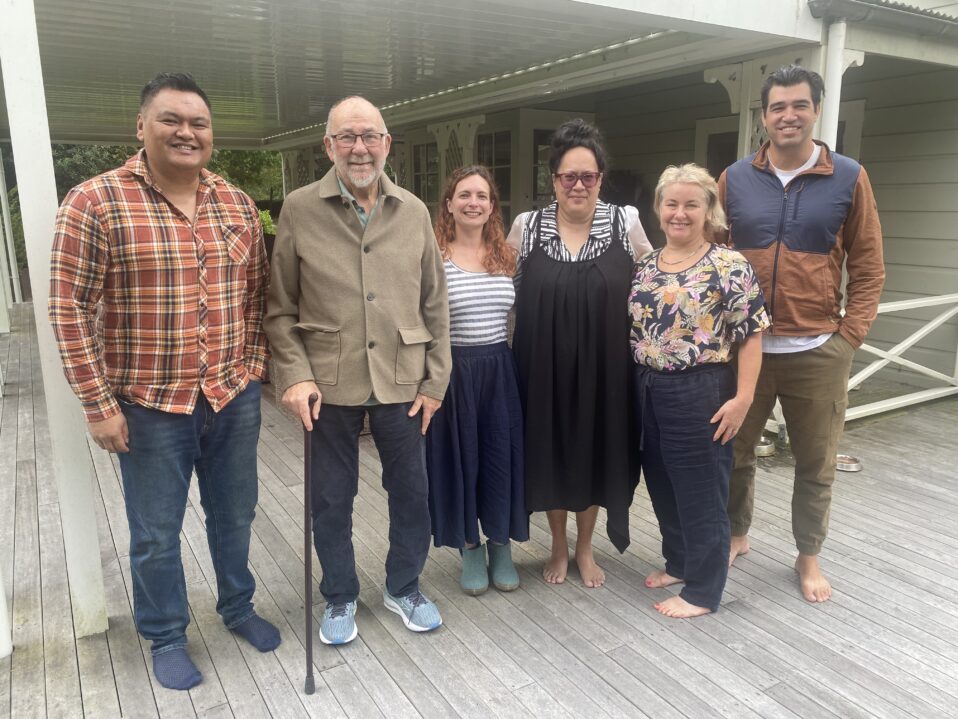
Recently The Hui E! Community Aotearoa whānau convened its first hui with the Tangata Whenua Forum made up of Chief Executives, Chair’s, and Deputy Chair of their respective iwi, hapū trusts and Papatipu. We were privileged to have them in our whare to get an insight into their voice being amplified as the treaty partner within the sector and how they will tautoko all of us.
The sector will see our forum members at upcoming hui across the motu and they are looking forward to connecting with us all.
Emergency Management Bill Submission
Follow this link for the Emergency Management Bill submission from Hui E! and 17 members of the Community Constellation.
Dementia New Zealand Hui
Hui E! Community Aotearoa has recently engaged with Dementia NZ who are active across the motu. In this current environment, it is important in our view to get the message and connection to our sector.
Alzheimer’s Dementia Learning Centre Te Pūtahi Akoranga mō Te Mate Wareware (DLC) responds directly to the key challenges facing the health and wellbeing sectors in Aotearoa New Zealand. From workforce burnout and gaps in confidence to repeated distress incidents and a lack of connection that leads to less compassionate care our evidence-based training tackles the genuine issues teams face on the ground
They offer in-person training, virtual classrooms, eLearning modules, a train the trainer program, immersive virtual reality sessions, and interactive tools like CarePlay™.
This range means whānau can choose what works best for them, whether it is hands-on learning, flexible online options, or targeted training for specific challenges.
Kōrero mai to us for any further details.
Resources and Reading
The D-List
Welcome to The D*List – a new home for disability culture in Aotearoa. Learn more about who we are, why we exist, and how we collaborate with people across our communities to create positive change together.
Click image to the right to access The D-List

Climate Action Tools for NFP
As a small not-for-profit (NFP) organisation, it can be challenging to determine where to begin addressing your organisation’s climate impact. CSI has done the mahi for you! This directory is the first of several resources they› are developing to support NFPs across Aotearoa to take climate action.
Click image to the right to access the report.

New Zealand Based AI
Kererū.ai is a majority New Zealand–owned entity established to deliver a sovereign, national-scale AI infrastructure capability launching 2026.
Click image to the right to access Kererū.ai

Community is Climate Resilience: Lessons from Cyclone Gabrielle & the Auckland Anniversary Floods
In the wake of storms and flooding once again affecting communities across Aotearoa, Environment Hubs Aotearoa are releasing research that underscores what many already know: connected communities, mana whenua and trusted local organisations consistently form the backbone of disaster response.
Click image to the right to access the report.
Re-Registration: The Best Time Was Earlier. The Next Best Time Is Now
If you are an Incorporated Society and have not begun re-registration or you can still take action now and land it well, before the deadline or before the year’s pressures really bite.
Click image to the right to access LEAD’s information on re-registration.

Rangatahi Data Insights: Report 2025
Ohi data navigator uses data to provide insight into the experiences of 12-24 year olds in Aotearoa. Representing 869,000 rangatahi over a seven year period from 2018 to 2024.
By understanding their experiences, needs and aspirations we can help unlock the next generation of creators, carers, decision-makers, innovators, and community builders.
Click image to the right to access the report.

Funding Heads Up
Important update for potential applicants to The Tindall Foundation:
The Tindall Foundation’s donations system and website will be offline and closed for applications 2-31 March 2026 as they transition to new platforms.
If you are planning to apply for funding or are an existing recipient wanting to submit a report, please ensure all drafts are completed and submitted or saved externally to the site before 2 March, as drafts cannot be recovered once the system shuts down. The new system and refreshed website will go live 1 April 2026.
For more information, email donations@tindall.org.nz or call 09 488 7103 or register here for updates
Social Investment Agency
Round Two of the Social Investment Fund New Investment pathway is open until 10 March.
New priority cohort
In addition to the three cohorts for Round One, Social Investment Fund Ministers have added a fourth priority cohort group for Round Two:
Mothers who experience harm from substance use, and their children, from pregnancy up to age five
For key information and how to apply follow this link: https://www.sia.govt.nz/social-investment-fund/pathway-one-new-investment

Upcoming Events
Ki te Hoe
Now in its fifth year, the Ki te Hoe wānanga series supports leaders in philanthropy and social change to better understand and support Māori aspirations, to operate more authentically in Aotearoa and to apply this knowledge to help build a thriving Aotearoa

ACE Aotearoa Awards
The ACE Aotearoa Awards are an opportunity to recognise excellence in teaching, programme innovation, sector service and leadership. Recipients of our awards are colleagues who have demonstrated best practice and a thorough understanding of ACE Teaching Standards. They are focused on self determination for learners and building strong communities. Let’s celebrate excellence in ACE.

The Philanthropy NZ Conference: 4-5 March 2026, Tāmaki Makaurau
Join us at the Philanthropy NZ Conference 2026 for kōrero, collaboration, and connection. Together, we’ll explore new ideas, celebrate generosity, and help shape the future of philanthropy in Aotearoa.
Community Constellation Member Highlight: Disabled Persons Assembly
Mojo Mathers, CE of the Disabled Persons Assembly (DPA), clearly values meaningful conversations. Her enthusiasm is particularly evident when discussing how organizations can enhance the accessibility of their workplaces, buildings, and communications. In her role at DPA, Mojo actively networks and advocates for disability rights to be upheld at all levels of government. She also encourages organizations to review their systems and practices to ensure genuine accessibility and inclusion for all staff and users.

DPA advocates for equity and inclusion of disabled people through system-wide change rather than individual advocacy. With 13 staff, all of whom identify as disabled and most working part time from home, DPA is a not-for-profit, pan-impairment disabled people’s organisation run for and by disabled people. DPA’s work is guided by the UN Convention on the Rights of Persons with Disabilities (UNCRPD) and Te Tiriti o Waitangi. DPA has a strong policy team who lead the development of submissions to both local, regional and central government as well as to UN bodies, advocating for everything from accessible parks and playgrounds through to inclusive employment policies and mandatory national accessibility standards. In this way, DPA works for more equitable outcomes for all disabled people throughout Aotearoa
This work is vital because Aotearoa falls short in meeting its obligations under the CPRD. While some goals are being met, significant gaps remain, especially regarding employment equity, where many previous gains have been eroded. Inaccessible infrastructure, pervasive discrimination, and other barriers to essential services collectively inflict harm, impacting the dignity and well-being of disabled people and their families and whānau. Discrimination and abelism within employment is a particular challenge. Gaining meaningful employment is difficult when there is inequitable access to education, workspaces, and necessary support. Moreover, disabled people earn 7.6% less then their colleagues and have higher overhead costs for medical needs and other accessibility tools.
Disabled staff contribute invaluable lived experience, fresh insights, and strengthen an organization’s overall skill base. However, accessibility too often gets relegated to the ‘too hard basket.’ Mojo shared that organizations sometimes approach her apologetically for delays in addressing accessibility barriers within their structures. She emphasised that there is never a too late, rather there is an opportunity now to consider how your workplace, communications, hiring practices, and workplace culture can create spaces for everyone to thrive. Even in these hard conversations there is learning that allows for remarkable things to happen. But those remarkable and progressive outcomes can only happen when we are in conversation and relationship-building.
Mojo further explained that there is not a fixed point to work towards but rather an ongoing and responsive learning to the needs and aspirations of staff, leadership and the communities they serve. While new technologies will undoubtedly offer innovative ways to enhance communication accessibility, a crucial element must be a genuine curiosity about user experience. This prompts important questions: Who benefits, and who is inadvertently excluded? What if the goal was truly universal access?
Ultimately, recognizing our collective ability to improve things for one another is profoundly empowering.
To learn more about DPA’s vital work and explore opportunities for collaboration, please visit their website at www.dpa.org.nz or contact them via email at info@dpa.org.nz.