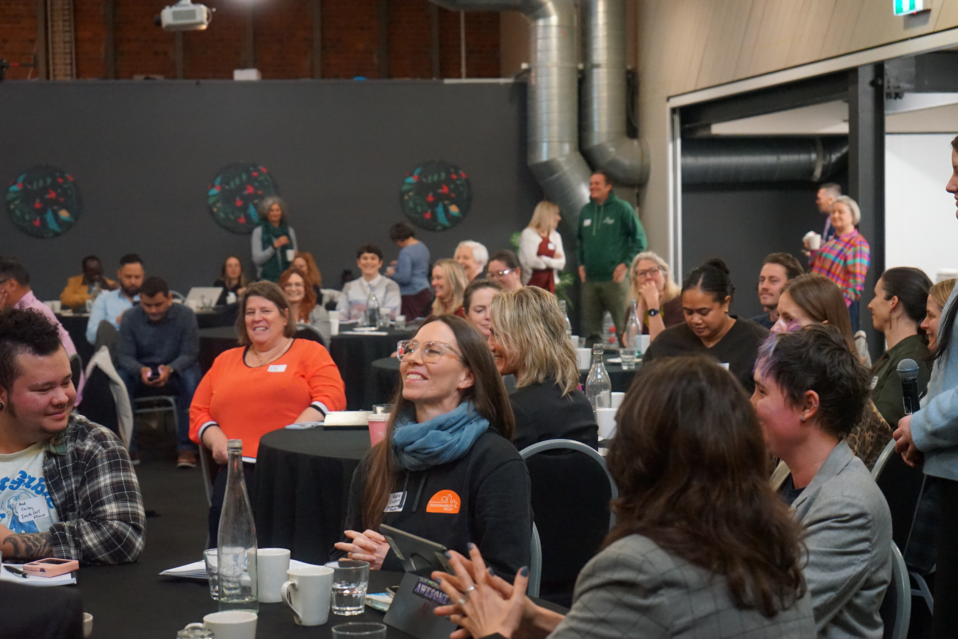
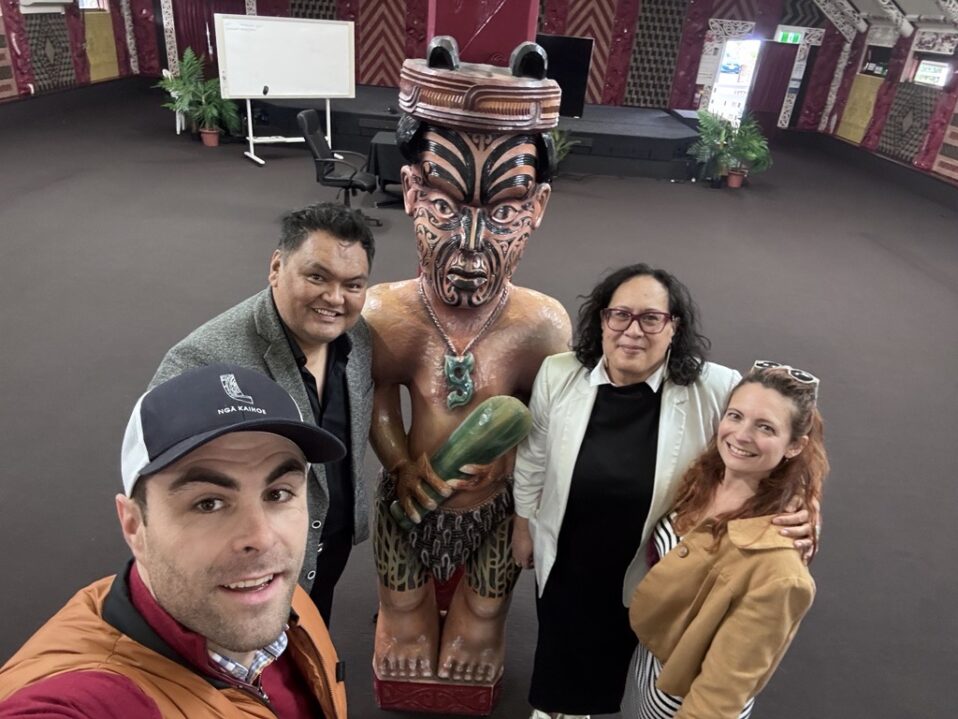
The Community Constellation is a group of peak bodies representing thousands of community organisations
- A Community Constellation of over twenty community peak bodies and infrastructure organisations came together in 2024 to collaborate more closely and is hosted by Hui E! Community Aotearoa. Te Tiriti o Waitangi (Te Tiriti) provides a foundation for the relationships between the organisations, and the work that we do together.
- The focus of the Community Constellation’s work includes:
-
- Give effect to Te Tiriti
-
- Weave a network for community infrastructure collaboration and advocacy
-
- Amplify collective action towards transformational systems-change.
- The following 16 organisations are a part of the Community Constellation and jointly make this submission:
-
- ACE Aotearoa
-
- Ara Taiohi
-
- Community Housing Aotearoa
-
- Community Networks Aotearoa
-
- Community Waikato
-
- Environment Hubs Aotearoa
-
- Hui E! Community Aotearoa
-
- Inclusive Aotearoa Collective Tāhono
-
- Inspiring Communities
-
- New Zealand Council of Christian Social Services
-
- NZ Navigator Trust
-
- Platform Trust
-
- SociaLink
-
- Tangata Whenua Community and Voluntary Sector Research Centre (Community Research)
-
- Te Pai Ora Social Service Providers Aotearoa
-
- Volunteering New Zealand | Tūao Aotearoa
The tangata whenua, community and voluntary sector works to support community wellbeing, social cohesion and whānau outcomes
-
- The tangata whenua, community and voluntary sector includes iwi, hapū, voluntary organisations, faith-based groups, health and social service delivery organisations, sports groups and community-led organisations.
-
- The term “sector” is dynamic and inclusive, encapsulating the diverse array of networks, groups and organisations that collectively shape the fabric of our communities in Aotearoa New Zealand. Māori, community, and voluntary groups that make up the sector are overwhelmingly kaupapa-driven.
-
- Although hugely diverse, the organisations and groups that make up the sector have in common a shared commitment to community wellbeing. This is what attracts many Kaimahi (staff), Mema Poari (board members) and Kaitūao (volunteers) to the sector, and what contributes to the sector’s remarkable ability to understand and respond to the wide range of communities they serve.
-
- Across these diverse entities, participants shared connections, values, and collaborative efforts that define the sector’s role in fostering social cohesion, cultural preservation, and community wellbeing.
-
- There are over 115,000 community organisations in Aotearoa, made up of 5% of the country’s paid workforce and 1.6 million volunteer hours each week.
This submission makes 2 recommendations to the Justice Committee
-
- The Community Constellation recommends the Regulatory Standards Bill (RSB):
-
- Be rejected outright by the Finance and Expenditure Committee and not reach second reading.
-
- The Government commits to giving effect to Te Tiriti, which is essential for building a fair society, achieving equitable outcomes, and enabling flourishing communities.
The Community Constellation opposes this Bill in its entirety
-
- We oppose this Bill in its entirety. As the Waitangi Tribunal stated: “We recommend the Crown immediately halt the advancement of the Regulatory Standards Bill, to allow for meaningful engagement with Māori and the dialogue envisioned by the Treaty partnership. We do not think the Bill should progress in its current form.”1
-
- Summary of our submission:
-
- This Bill is likely to undermine Te Tiriti o Waitangi, community wellbeing and cohesion.
-
- Communities will likely be negatively impacted by constraining legislative processes.
This Bill is likely to undermine Te Tiriti o Waitangi, community wellbeing and cohesion
-
- Te Tiriti o Waitangi, along with He Whakaputanga, is a founding document of New Zealand. Te Tiriti is foundational and important to the tangata whenua, community and voluntary sector.
-
- The RSB aims to impose a set of overarching legal principles on all government regulation in New Zealand, undermining He Whakaputanga and Te Tiriti o Waitangi (and their provisions) in their omission.
-
- The RSB framework prioritises uniformity and measurable economic benefits in privileging the rights of individuals, corporations, private property and cost-efficiency in its stated principles. This framework undermines the cornerstone of our society – legislating for the common good towards community wellbeing.
-
- As a sector committed to, and working to advance, social cohesion, this is both disappointing and undermining of tangata whenua and tangata tiriti efforts to grow relationships between communities. This will likely compound already unacceptable inequities for Māori and marginalised communities, which include resourcing, supports and outcomes.
-
- The RSB includes a principle that all people should be treated identically under the law. This principle ignores, and will likely compound, the structural inequities faced by Māori and marginalised groups including other ethnic groups, disabled people and LGBTQIA+ communities.
-
- In the 2023 Kōrerotia Sector Wellbeing report, Hui E! found that Māori providers and groups report a lack of funding for the provision of rongoā, hauora and cultural services. Many providers rely on koha to provide services, meaning that they are only partially or nominally funded. Māori providers and groups reported concerns related to the cultural capability and capacity to respond to fund and resource kaupapa Māori organisations, communities and services.
-
- There is still a long way to go for our sector to realise the potential of Te Tiriti, including capability building and equitable funding. We are interested in having genuine and inclusive national conversations on how Te Tiriti can be given effect to, towards a community-powered Aotearoa.
Communities will likely be negatively impacted by constraining legislative processes
-
- This Bill will require legislation, both new and existing, to be reviewed against the stated principles.
-
- This process will constrain the ability of government agencies to draft legislation that is fit for purpose in achieving positive outcomes for communities, including consultation processes that may not recognise or value community voices in lawmaking, and discouraging bold action to address social issues.
-
- Our concerns include:
-
- The RSB’s cost-efficiency and minimal interference tests may push decision-makers toward the funding of privatised or standardised services at the expense of holistic and tailored supports, including in remote areas, kaupapa Māori services and wraparound disability supports.
-
- Efforts to address inequities — for example, by targeting services or funding to Māori, Pacific peoples, disabled people or low-income populations may be challenged for breaching the principle of ‘equal treatment under the law’
-
- Centralised consistency tests may penalise local decision-making.
-
- Preventative or protective solutions or legal protections — like inclusive education, accessible transport, or universal design have longer-term outcomes that may be inconsistent with the existing principles of the RSB.
-
- Anticipation of being ‘inconsistent’ with the RSB principles may deter government agencies from partnering with iwi and communities towards collaborative co-design of responsive systems and policies.
23 June 2025