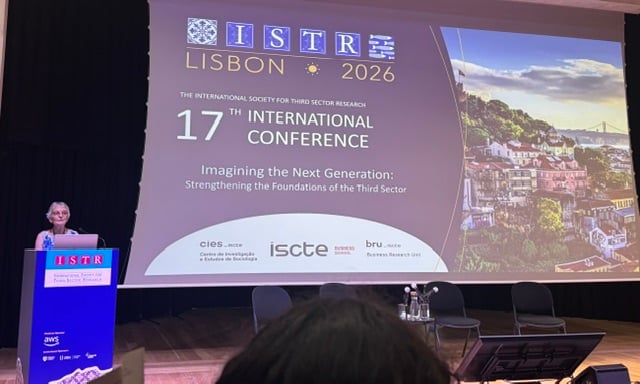
If you dug a hole in Aotearoa and managed to get through the earth’s core and pop up the other side, you’d end up in Portugal. So it was hilarious to sit down in the first session and find out I’m sat next to another New Zealander! It took being the other side of the world for Carolyn Cordery and I to meet, and awesome to hear her open the conference in te reo Māori.
Portugal was selected for this year’s this year’s International Society for Third Sector Research conference as the last decade has seen investment in their ‘social economy’ through legislation, infrastructure, leadership and funding.
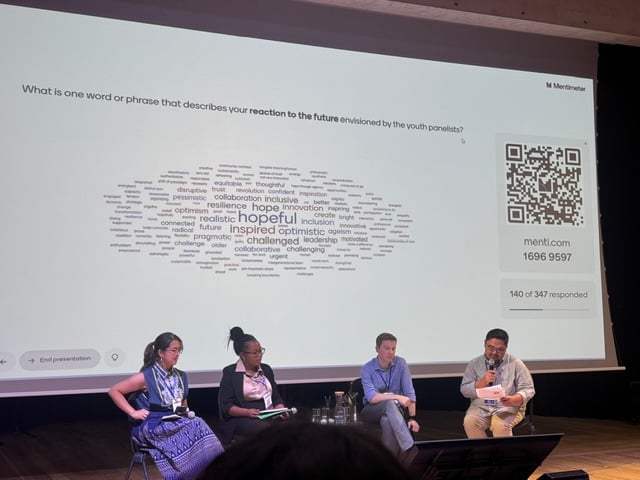
The conference started with a youth plenary session on addressing global challenges and how will the sector be transformed. Young people from Zambia, the Philippines and the UK came together on this panel.
The biggest takeaway for me wasn’t just what was said. Unlike any other session so far, the moderator and panel had co-designed the season together and thought carefully about how to get us ready for the conversation with an interactive quiz and crowdsourced reflections. The conversation met us where we were and included us along the way.
Pau Apines from the WeSolve Foundation in The Philippines shared insights as an incubator for cross-sector relationships. She said the future is less about organisations and more about ecosystems and coalitions. Where are the spaces of trust to move spaces forward?
They build communities of care, take time with each other, and compensate young people fairly. The future is more collaborative and intergenerational.
Another session at the International Society for Third Sector Research sector conference explored why Portugal has become one of Europe’s social innovation leaders.
The answer was investing in the ecosystem:
• creating enabling public policy
• resourcing a sector umbrella organisation
• investing with European Union funding
• backing experimentation
• building social entrepreneurs
• supporting investors.
This ecosystem lens was evident in how @Portugal Inovação Social, instead of “How will you sustain this beyond our funding?”, asks:
“If this works, how will you disseminate the impact?”
The focus becomes the sustainability of the impact, not necessarily the sustainability of the organisation itself.
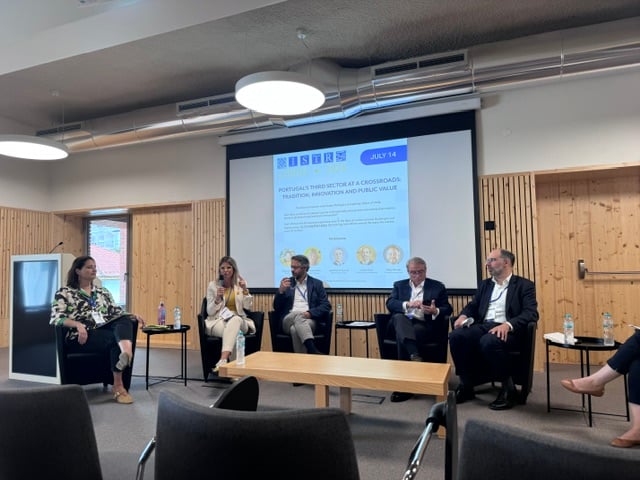
In the local session I asked a question about language.
In Portugal, people talk about the Social Economy; a recognised part of the economy alongside government and private enterprise.
In Aotearoa New Zealand, there are many different ways we describe our own ecosystem.
Depending on who you ask, we’re the community and voluntary sector, Tangata Whenua, community and voluntary organisations, the charitable sector, the NGO sector, the third sector and the for-purpose sector. Philanthropic foundations, funders and social enterprises are discussed separately again.
Those different terms reflect real histories, identities and ways of organising. I don’t think the answer is the ‘easiest’ single label.
Te Tiriti o Waitangi shapes relationships here in ways that have no direct equivalent, and iwi/hapū cannot be understood through the same lens as charities or social enterprises.
Portugal’s language gives visibility to the collective contribution of organisations that strengthen communities, build social cohesion, create employment and generate public value. It creates a platform for diverse organisations to advocate together while retaining their individual identities.
Perhaps that’s the question worth bringing home.
Not what should we call ourselves?
But how do we tell a coherent story about our collective contribution, while honouring the distinct roles and whakapapa of the parts and organisations that make up our ecosystem?
I’d love to hear how others think about this. Is our diversity of language a strength? Or does it sometimes make it harder to articulate our shared value?
Speaking of language, I was lucky (and surprised!) to bump into my old sociology Professor and boss at the Third Sector Research Centre in the UK, Professor John Mohan who coined the term ‘civic core’, and former colleague Professor James Rees.
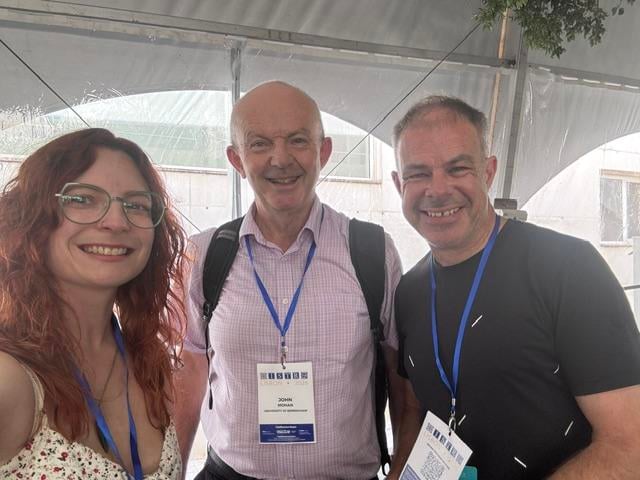
Thanks to the Todd Foundation, Katie was able to attend this global event, while visiting family in Europe.